Wages and the value of things
In the original: δηνάριον denarion (“denarius”)
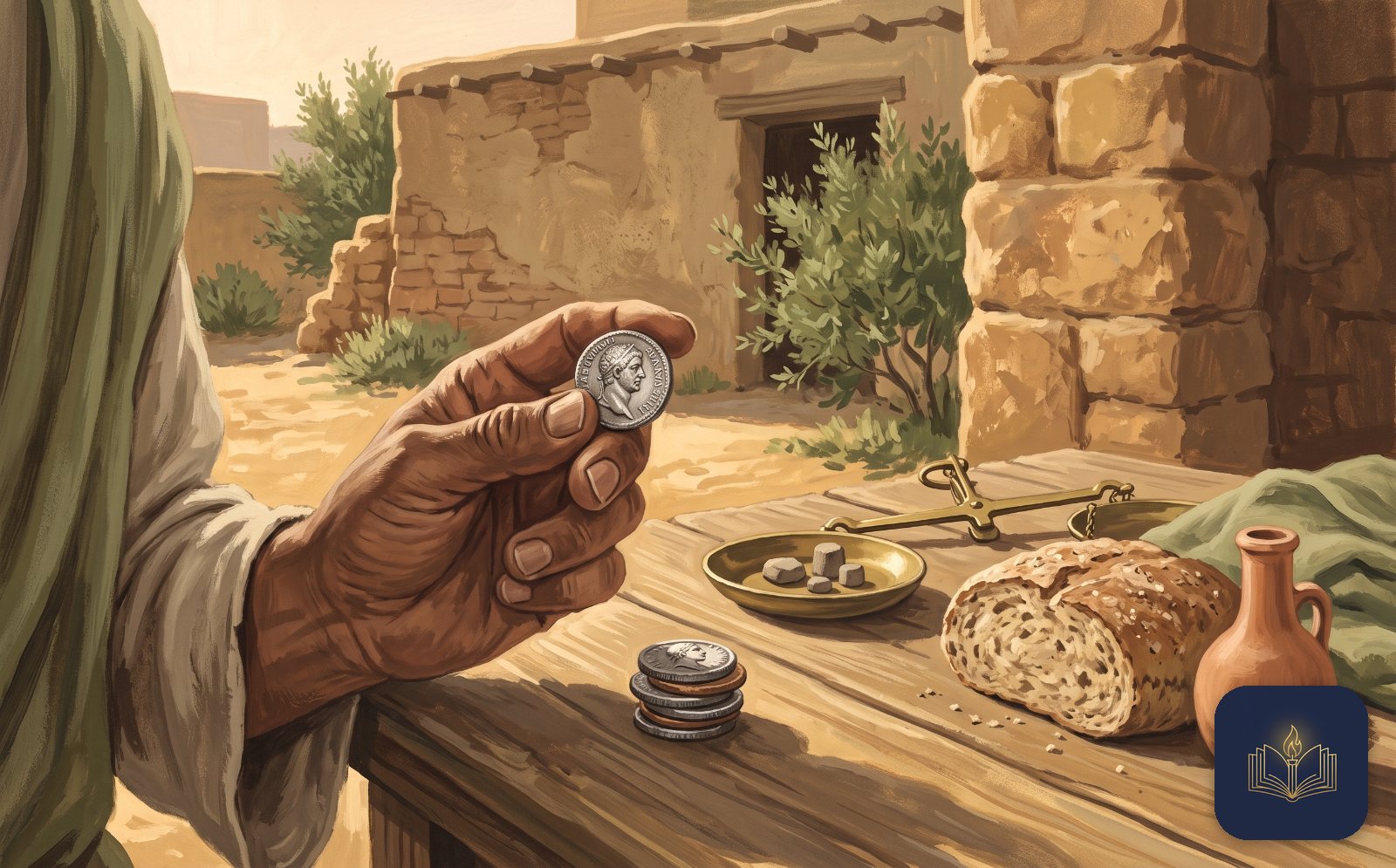
A denarius equaled a day's wage. So “Two hundred denarii worth of bread” were not enough for the five thousand, and Mary's perfume (three hundred denarii) was worth nearly a year's wages: figures that reveal the scale of each scene.
Where it comes from
The denarius was the standard Roman silver coin and a day-laborer's typical daily wage. The Gospels use it as the everyday measure of value, which lets us grasp the scale of the figures mentioned.