The feasts in Jerusalem
By God’s command
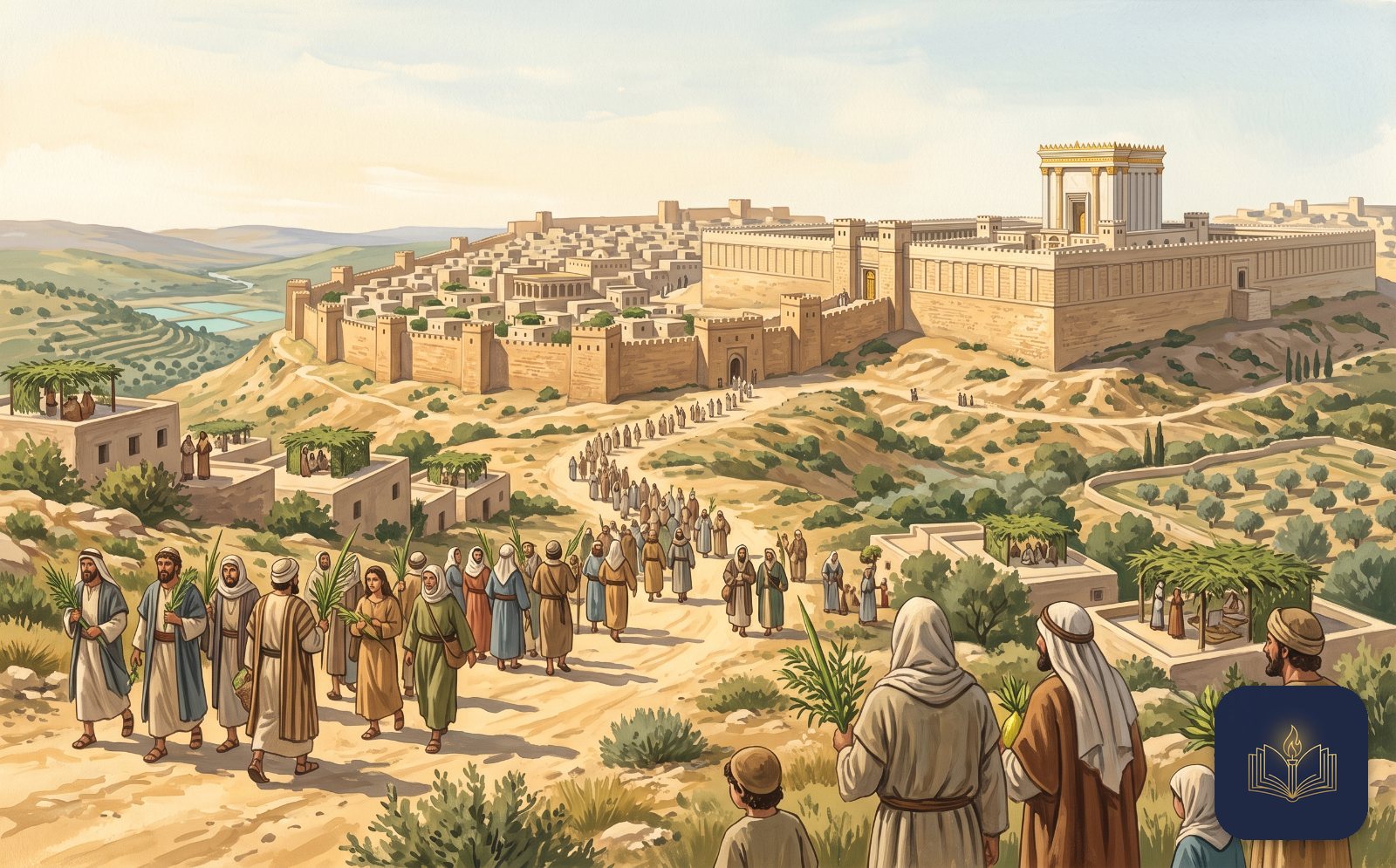
John marks the rhythm of the book by the feasts in Jerusalem: Passover (2:13; 6:4; 11:55), a feast he does not name (5:1), Tabernacles (7:2) and the Dedication (10:22). They were not all alike. The Law required every man to appear three times a year at the place God would choose: at the Feast of Unleavened Bread, which is joined to Passover; at the Feast of Weeks, which is Pentecost; and at the Feast of Booths, which is Tabernacles (Deut 16:16). Those are the pilgrim feasts, and during them crowds filled the city. Of the three, John names two; Pentecost does not appear in his Gospel. Nor does he always tell of a going up: at the Passover of 6:4 Jesus is in Galilee, across the sea. The Dedication is not a pilgrim feast, because the Law does not command it. Of it John says only that it was being kept in Jerusalem, that it was winter, and that Jesus was walking in the temple in Solomon’s porch (10:22-23), a covered colonnade of the temple (Acts 3:11; 5:12).
Where it comes from
Passover was born at the exodus from Egypt, commanded by God (Ex 12); Weeks and Tabernacles were set in the Law along with it (Lev 23; Deut 16). The Dedication is of human origin and later than the Old Testament. Its Hebrew name, hanukkah, means dedication, and it is the same word Scripture uses for the dedication of the altar of the tabernacle (Num 7:10), of Solomon’s altar (2 Chr 7:9) and of the wall of Jerusalem (Neh 12:27). What follows is history, not Scripture: in 167 BC King Antiochus IV profaned the temple and set up a pagan altar on top of God’s altar. Three years later, in 164 BC, the Jews who had retaken Jerusalem cleansed the sanctuary, built a new altar and dedicated it again on the 25th day of the month of Kislev, the very day on which it had been profaned. They celebrated for eight days, with burnt offerings and sacrifices of praise, with songs, harps and cymbals, and with the front of the temple adorned with crowns and shields of gold; they kept it in the manner of the Feast of Tabernacles, carrying branches and palms, and they ordained that it be kept this way every year on those same dates.